How does Canning work

Canning Methods

By |2019-02-26T06:48:18+02:00November 5th, 2018|

Canning Methods Food Preservation during the Canning Process To prevent the food from being spoiled before and during containment, a number of methods are used: pasteurisation, boiling (and other applications of high temperature over a period of time), refrigeration, freezing, drying, vacuum treatment, antimicrobial agents that are natural to the recipe of the foods being preserved, a sufficient dose of ionizing radiation, submersion in a strong saline solution, acid, base, osmotically extreme (for example very sugary) or [...]

Process of Making Tins

By |2019-02-26T06:50:32+02:00November 5th, 2018|

What is the process of manufacturing tin cans? Rimmed three-piece can construction involves several stages; Forming a tube and welding or soldering the seam of the sides Joining the bottom end to the tube Printing or attaching labels to the can Filling the can with content; sterilization or retorting is required for many food products Joining the wall and top "end". Double seam rims are crucial to the joining of the wall to a top or bottom surface. An extremely tight fit between [...]

What is a Double Seam?

By |2019-02-26T06:51:48+02:00November 5th, 2018|

What is a Double Seam? A double seam is a canning process for sealing a tin can by mechanically interlocking the can body and a can end (or lid). Originally, the can end was soldered or welded onto the can body after the can was filled. However, this introduced a variety of issues, such as foreign contaminants (including lead and other harmful heavy metals). The double seam was later developed as a cheaper and safer alternative and quickly replaced the [...]

What is a Tin Can?

By |2019-02-26T06:55:49+02:00November 5th, 2018|

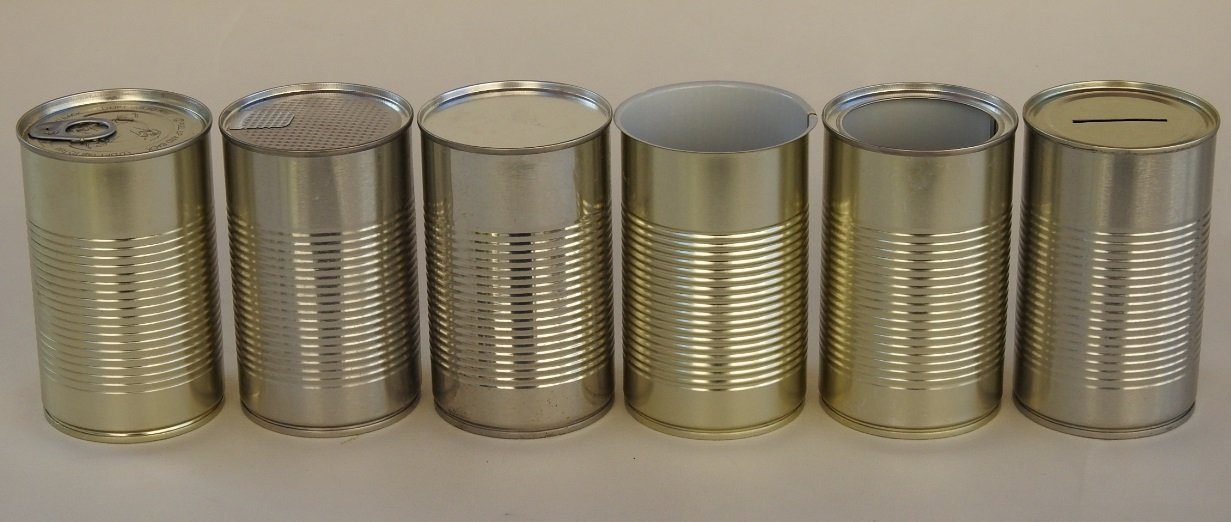
What is a Tin Can? A tin can, tin (especially in British English, Australian English and Canadian English), steel can, steel packaging or a can, is a container for the distribution or storage of goods, composed of thin metal. Many cans require opening by cutting the "end" open; others have removable covers. Cans hold diverse contents: foods, beverages, oil, chemicals, etc. Steel cans are made of tinplate (tin-coated steel) or of tin-free steel. In some dialects, even aluminium cans are called "tin cans". [...]

Go to Top