Tin Can Manufacturer

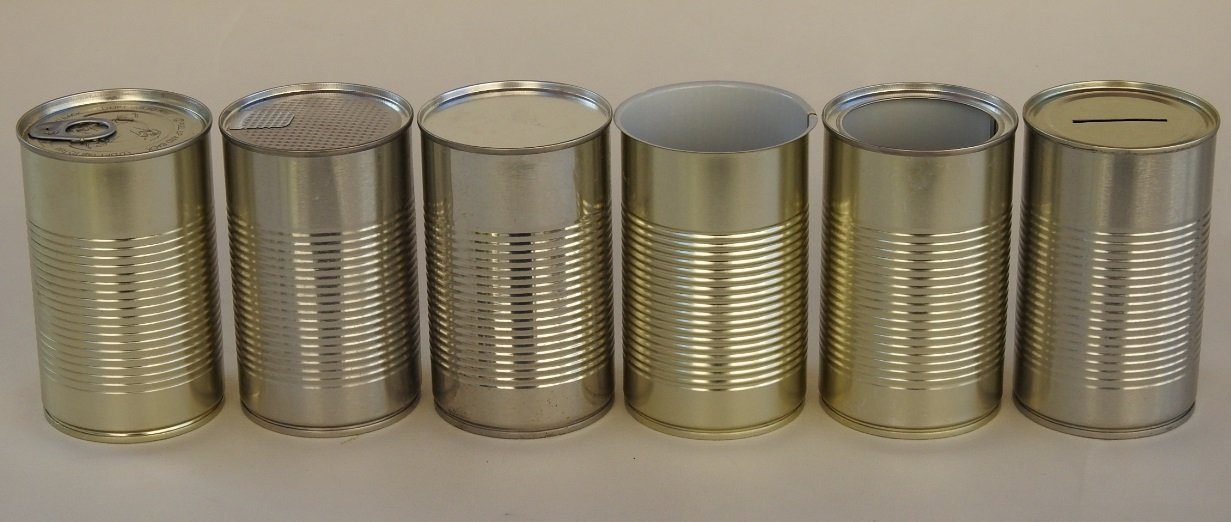
Why are there ridges on tin cans?

By |2020-01-15T20:06:44+02:00February 8th, 2019|

Why are tin cans ribbed? The answer is quite simple and straightforward. Ribbing on Tin Cans strengthens the tin Ridges on Tins allow it to Expand and Contract Not all Tin Cans require Ribbing CONTACT US Tin Can Manufacturer Here's why some tins are smooth and others have ridges: 1.) Ribbing on Tin Cans strengthens the tin. You can see the general principle in cardboard. The centre is corrugated [...]
Visit Us

By |2019-08-05T11:56:35+02:00January 25th, 2019|

Tin Supplier South Africa Visit Us Since 1994, Can It has been a leading manufacturer and supplier of branded tin packaging and collection tins in South Africa. Our vast range of products such as custom tin boxes, canisters, ointment tins, collection tins and money boxes are available worldwide. We have proudly supplied millions of cans and canisters to our valued customers and non-profits. Can it is a tin manufacturer and suppliers to retailers, wholesalers, the tin packaging [...]

What is a Can Seamer?

By |2019-02-26T06:44:42+02:00November 5th, 2018|

What is a Can Seamer? A can seamer is a machine used to seal the lid to the can body. The lid or "end" is usually tinplated steel while the body can be of metal (such as cans for beverages and soups), paperboard (whisky cans) or plastic. The seam formed is generally leak-proof, but this depends on the product being canned. The seam is made by mechanically overlapping the two layers to form a hook. Different parameters of the hook are measured [...]

Canning Methods

By |2019-02-26T06:48:18+02:00November 5th, 2018|

Canning Methods Food Preservation during the Canning Process To prevent the food from being spoiled before and during containment, a number of methods are used: pasteurisation, boiling (and other applications of high temperature over a period of time), refrigeration, freezing, drying, vacuum treatment, antimicrobial agents that are natural to the recipe of the foods being preserved, a sufficient dose of ionizing radiation, submersion in a strong saline solution, acid, base, osmotically extreme (for example very sugary) or [...]

Process of Making Tins

By |2019-02-26T06:50:32+02:00November 5th, 2018|

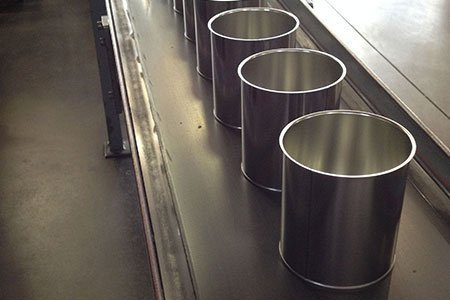
What is the process of manufacturing tin cans? Rimmed three-piece can construction involves several stages; Forming a tube and welding or soldering the seam of the sides Joining the bottom end to the tube Printing or attaching labels to the can Filling the can with content; sterilization or retorting is required for many food products Joining the wall and top "end". Double seam rims are crucial to the joining of the wall to a top or bottom surface. An extremely tight fit between [...]

What is a Double Seam?

By |2019-02-26T06:51:48+02:00November 5th, 2018|

What is a Double Seam? A double seam is a canning process for sealing a tin can by mechanically interlocking the can body and a can end (or lid). Originally, the can end was soldered or welded onto the can body after the can was filled. However, this introduced a variety of issues, such as foreign contaminants (including lead and other harmful heavy metals). The double seam was later developed as a cheaper and safer alternative and quickly replaced the [...]

What is a Tin Can?

By |2019-02-26T06:55:49+02:00November 5th, 2018|

What is a Tin Can? A tin can, tin (especially in British English, Australian English and Canadian English), steel can, steel packaging or a can, is a container for the distribution or storage of goods, composed of thin metal. Many cans require opening by cutting the "end" open; others have removable covers. Cans hold diverse contents: foods, beverages, oil, chemicals, etc. Steel cans are made of tinplate (tin-coated steel) or of tin-free steel. In some dialects, even aluminium cans are called "tin cans". [...]

Go to Top